After a long, hot summer in a cold office basement, I am back to the place I love best. When my children were younger, they'd come in, slam the door, drop their books, and get a snack: in that exact order. And they'd call out, "I'm home." Now that half of them are gone, and drive a distance to return, "I'm home" means so much more. After spending the entire growing season in an office, I'm home. The garden was a wreck, but laboring to restore the vegetable and flower beds is the most meaningful thing I've done all season.
The water spigot here represents the font of life for my little acre. One hundred-plus degree days took their toll, reducing cantaloupes and pole beans alike to wilting masses. Cucumber beetles reigned the day. Not spending time in the garden every day allowed huge swaths of weeds to annex my strawberry and raspberry patches.
A couple breezy days of work have mended the garden; several rows of lettuce--Bibb, Iceberg, and Black Seeded Simpson--are coming along fine. The sugar pea pods are a few inches high, and the spinach has passed the cotyledon stage just in time for the rabbits to arrive. Yes, I am home.
Strawberry Wine Foxgloves, 2nd year - from seed
Wednesday, September 28, 2011
Tuesday, May 24, 2011
Spring Serenity
Never ending garden maintenance is eased by vistas of lush green and paintbox flowers. Don't you wish every day in the garden was as beautiful as this one? More foxgloves to see...I am so proud of these gorgeous stalks that one picture is not enough.
Thursday, May 19, 2011
Rudbeckia - Masses of Color This Summer and Next
Growing Perennials from seed is a money-saving venture. Many will not bloom the first year, and perseverance is a prerequisite for not only growing the plants from seed but wintering them over in your garden until next spring. Then, perhaps you'll get to enjoy the flowers you've worked so hard to see.
Rudbeckia, the Latin family of the Black Eyed Susan, has both perennial and annual varieties. Both will flower the first year from seed. This perennial will scatter enough seed from its giant, bushy bouquet to keep you in Black Eyed Susans from now 'til eternity. Finches love the seed, and you'll be entertained just watching them flock to the bare stalks in winter.
This spring my garden had hundreds of "volunteer Susans," and being the frugal type I potted a dozen or so to give away.
Rudbeckia, the Latin family of the Black Eyed Susan, has both perennial and annual varieties. Both will flower the first year from seed. This perennial will scatter enough seed from its giant, bushy bouquet to keep you in Black Eyed Susans from now 'til eternity. Finches love the seed, and you'll be entertained just watching them flock to the bare stalks in winter.
This spring my garden had hundreds of "volunteer Susans," and being the frugal type I potted a dozen or so to give away.
Tuesday, May 17, 2011
Fresh, Organic Sweets Are Right Out Back
Last summer I walked into a grocery and the only item on my list from the produce section was a lemon. It was a stunning revelation. The garden at home was full of strawberries, blueberries, raspberries, and a melon patch which included watermelon and cantaloupe. Not to mention that everyday items such as onions, carrots, potatoes, eggplant, lettuce, spinach,tomatoes, peppers, corn....I'm losing track...abounded. Growing food is work; hot, arduous, dirty labor. But the rewards are sweet and sometimes spicy. And preserving food will extend those rewards into the cold winter months.
My strawberry patch is overflowing with ruby red Sequoia berries. This type was chosen over the Quinalt ever bearing variety, a decision I do not regret. Despite the claim that they produce all season long, the Quinalt plants which I have located throughout my garden haven't produced well. They do flower, but the yield is measly. I wholeheartedly recommend Sequoia protected by fencing. The 18" netting which surrounds our Sequoia patch has kept out rabbits, increasing our yield.
The Dwarf Elberta Peach Tree is loaded with over 100 little peaches; it's a dwarf, but the fruit will reach full size. Practicality tells me that some of the fruit may have to be removed early or supports made for the smaller branches. It will reach 8-10 ft. in height and needs no pollinator, although adding a Red Haven Peach in the yard is said to increase fruit on both trees.
My strawberry patch is overflowing with ruby red Sequoia berries. This type was chosen over the Quinalt ever bearing variety, a decision I do not regret. Despite the claim that they produce all season long, the Quinalt plants which I have located throughout my garden haven't produced well. They do flower, but the yield is measly. I wholeheartedly recommend Sequoia protected by fencing. The 18" netting which surrounds our Sequoia patch has kept out rabbits, increasing our yield.
The Dwarf Elberta Peach Tree is loaded with over 100 little peaches; it's a dwarf, but the fruit will reach full size. Practicality tells me that some of the fruit may have to be removed early or supports made for the smaller branches. It will reach 8-10 ft. in height and needs no pollinator, although adding a Red Haven Peach in the yard is said to increase fruit on both trees.
Thursday, January 6, 2011
Keeping Christmas in Your Heart Every Day of the Year
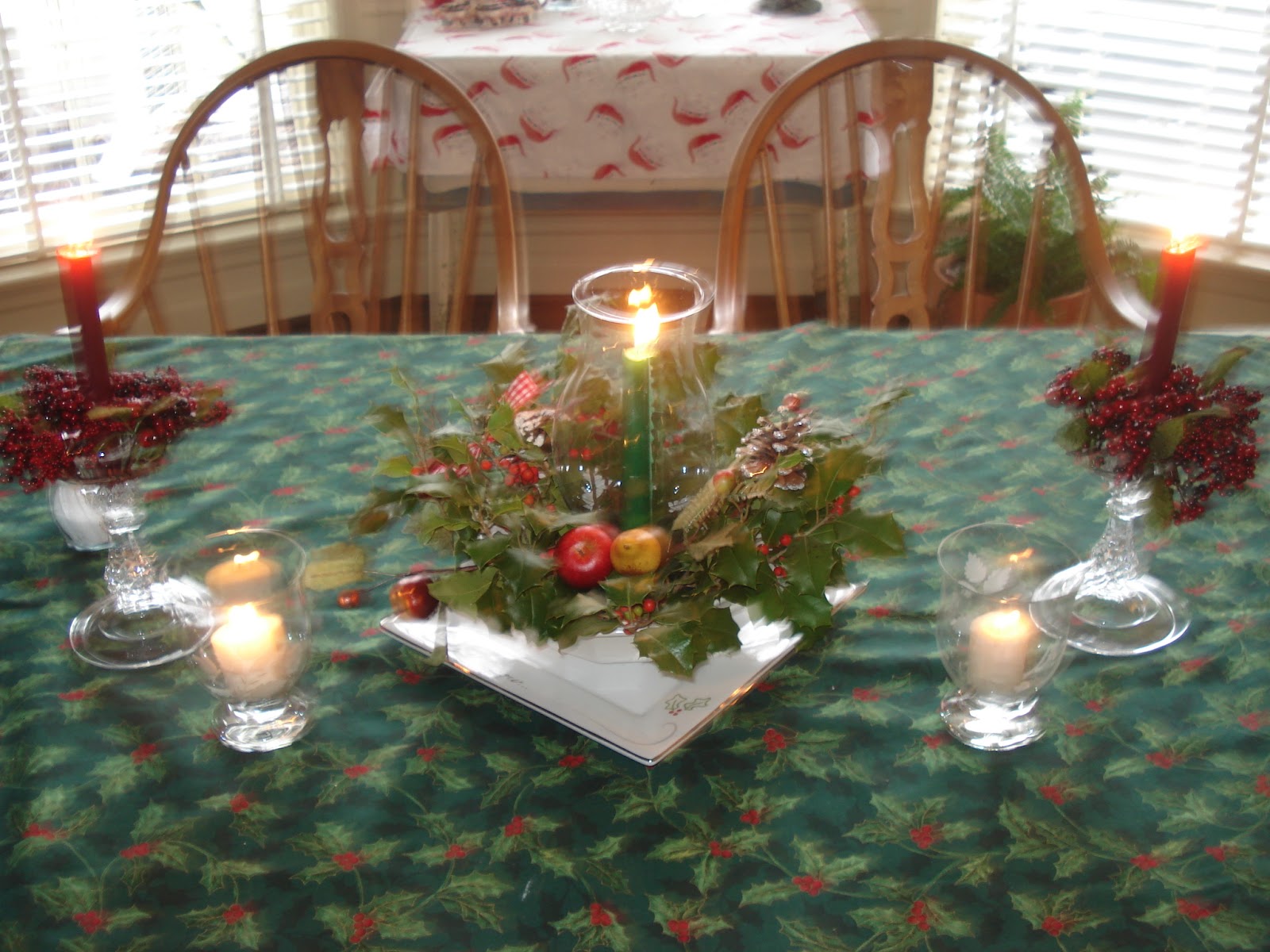
I believe many people are disappointed during the Christmas holidays because they build expectations which cannot be met. This year I decided to think about Christmas all year round; not just snapping up a present in July or getting something on sale. No, living the real meaning behind Christmas every day...not just for one day.
For everyone who decorates a Christmas tree on Thanksgiving and pitches it on December 26, listen up. Christmas is a season which lasts until Epiphany. Stretch it out, enjoy it, and Happy Holy Days.
Saturday, December 4, 2010
Reaping What We've Sown
On many a hot day working in the garden, my thoughts turned to just what our labor would yield. Now, December and 30 degrees, a couple of my smaller butternut squashes will be roasted and cooked into a spicy soup. Here's the recipe:
Spicy Butternut Squash Soup
2-1/2 - 3 cups pureed butternut squash*
2 TBSP oil
2 tsp Cajun spice (or 1 tsp cayenne pepper)
1 cup diced raw parsnip (or potato)
1/3 cup minced scallions
3 cups chicken (or vegetable) broth
1 medium jalapeno pepper, seeded and quartered
Salt and pepper to taste
Prepare the squash: slice 1 medium butternut lengthwise and seed. Bake for 30 min at 325 degrees OR microwave until tender. Scoop out pulp and freeze any extra.
While the squash is being cooked, sautee the scallion in oil. Add broth, parsnip, and squash; simmer until tender, about 50 minutes. Remove pepper strips and puree the soup.
This soup is great when topped with a scoop of steamed brown rice. Substituting vegetable broth easily makes this a hearty vegan meal.
Photo of simmer stage.
I use a hand mixer to puree the soup. Don't forget to top with a half cup of steamed brown rice. It's quite hearty.
Spicy Butternut Squash Soup
2-1/2 - 3 cups pureed butternut squash*
2 TBSP oil
2 tsp Cajun spice (or 1 tsp cayenne pepper)
1 cup diced raw parsnip (or potato)
1/3 cup minced scallions
3 cups chicken (or vegetable) broth
1 medium jalapeno pepper, seeded and quartered
Salt and pepper to taste
Prepare the squash: slice 1 medium butternut lengthwise and seed. Bake for 30 min at 325 degrees OR microwave until tender. Scoop out pulp and freeze any extra.
While the squash is being cooked, sautee the scallion in oil. Add broth, parsnip, and squash; simmer until tender, about 50 minutes. Remove pepper strips and puree the soup.
This soup is great when topped with a scoop of steamed brown rice. Substituting vegetable broth easily makes this a hearty vegan meal.
Photo of simmer stage.
I use a hand mixer to puree the soup. Don't forget to top with a half cup of steamed brown rice. It's quite hearty.
Subscribe to:
Posts (Atom)